Qualifications & Standards

Our works are carried out by trained technicians holding. IICRC Applied Microbial Remediation Technician (AMRT), IICRC Water Damage Technician (WRT) and Damp & Mould: Remedial Operations and Planning (Tier 3) qualifications, working in line with IICRC S520 standards.

Mould Treatment & Remediation

Mould is not just a surface issue. It is usually a sign of an underlying moisture problem that needs to be properly understood and controlled. 

At Revenge Kleaning, we assess the full environment, identify the cause, and carry out controlled remediation works to deal with contamination safely and properly. 

Our works are carried out by trained and qualified technicians holding: 

  • IICRC Water Damage Restoration Technician (WRT)  
  • IICRC Applied Microbial Remediation Technician (AMRT)  
  • Damp & Mould: Remedial Operations and Planning (Tier 3)  


All works are completed in line with IICRC S520 standards. 

Full Description

Understanding the Problem 
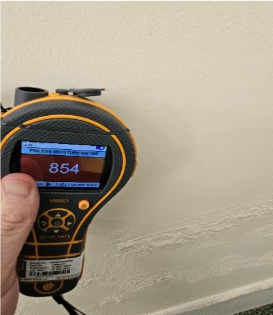
Every job starts with a proper assessment. We take moisture readings, review environmental conditions, and look at how the property is being used and ventilated is being used. This allows us to identify what is actually causing the issue rather than just treating what you can see. 

Controlled Remediation Approach 
Our works are carried out under controlled conditions to prevent spread and cross contamination. Depending on the environment, this may include HEPA filtration, containment, and controlled remediation methods to deal with affected areas safely. 

Professional and Compliant 
All works are completed by trained technicians using the correct PPE and equipment. We follow recognised industry standards and safety procedures to ensure works are carried out properly and consistently. 

Once the source is understood, we remove visible mould, treat affected surfaces using anti fungal and anti microbial products, eliminate spores, and carry out deep decontamination to restore your property to a safe, healthy condition. Every project is completed with scientific precision and full compliance with safety standards.

Key Features

  • Full property inspection with moisture readings and environmental assessment  
  • Identification of the moisture source, not just surface issues  
  • Controlled remediation and decontamination of affected surfaces 
  • HEPA filtration and air quality control where required  
  • Removal and disposal of heavily affected materials  
  • Odour control and environmental stabilisation  
  • Use of professional drying equipment where required  
  • Works carried out by trained and qualified technicians  
  • Fully insured and compliant with industry standards  
  • Suitable for domestic, commercial, and tenanted properties  

Our Process

1. Inspection and Assessment

We attend site and carry out moisture readings, visual checks, and environmental assessment to understand the extent of the issue.

2. Set Up and Control Measures

Before any work starts, the area is set up correctly. This may include protection, containment, and air control depending on the level of contamination.

3. Source Identification

We identify the root cause such as condensation, leaks, or ventilation issues. Without this step, the problem is likely to return.

4. Remediation Works

Affected areas are treated using controlled methods. This may include surface decontamination and removal of materials where required

5. Air and Environmental Treatment

Where needed, we use filtration or treatment methods to improve internal conditions and reduce airborne contamination.

6. Final Checks and Reporting

Moisture levels are rechecked and a clear report is provided outlining findings, works completed, and recommendations.

Our Process

1. Inspection & Moisture Assessment

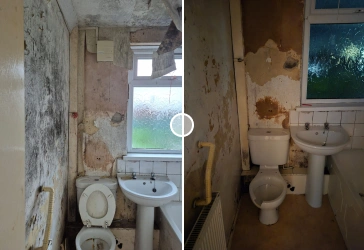
We begin with a detailed survey to identify the extent of mould growth and any underlying moisture issues. Using calibrated moisture meters and diagnostic equipment, we take readings from walls, ceilings, timber, and surrounding surfaces to determine the source and severity of the problem.

2. Safety Preparation & PPE

Our team sets up a safe working area and uses full protective equipment. Containment measures may be put in place to prevent the spread of spores to unaffected parts of the property.

3. Source Identification & Moisture Control

We analyse the moisture readings to identify the cause — such as condensation, leaks, poor ventilation, or rising damp. We then advise on corrective actions so the issue can be permanently resolved and mould does not return.

4. Professional Remediation

All affected areas are treated using industry-approved techniques, including HEPA vacuuming, surface preparation, cleaning, and antimicrobial treatment. Severely damaged or unsalvageable materials may be removed where necessary.

5. Remediation & Air Sanitisation

After treatment, we sanitise the area to eliminate residual spores and restore hygienic conditions. Air filtration or fogging may be used where appropriate to improve air quality and reduce airborne contaminants.

6. Final Verification, Report & Client Submission

Once the area is fully cleaned, we retake moisture readings to verify improvement.
A full written report — including findings, moisture readings, before/after details, and recommendations — is compiled and submitted to the client on completion

Gallery

Real Site Readings and Assessment 

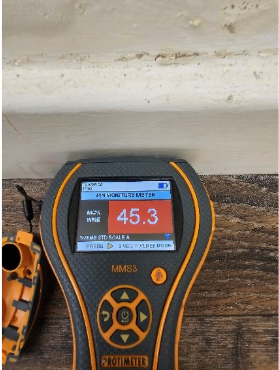
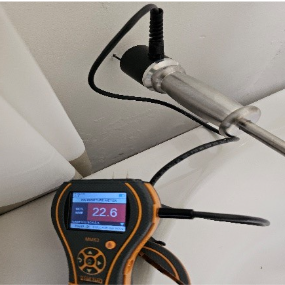
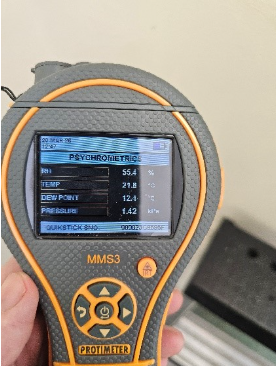
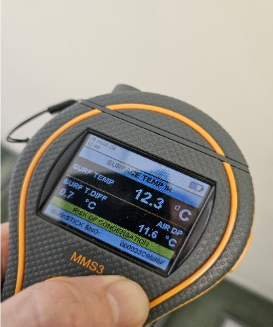
We use professional monitoring equipment to assess moisture levels, condensation risk, and internal conditions. This allows us to identify the true cause of the issue, not just what is visible. 

Pin moisture reading confirming elevated moisture levels within timber
Hammer probe testing used to confirm moisture levels within materials, beyond the surface
Internal environmental readings including humidity, temperature, and dew point to understand overall conditions within the property
Surface temperature and condensation risk assessment used to identify areas prone to moisture formation
Pinless moisture readings used for quick, non intrusive assessment of surface level moisture

Call to Action

If you are dealing with ongoing mould issues, it needs to be looked at properly. We can attend site, assess the situation, and provide clear next steps based on what is actually causing the problem.

Fill Out The Form To Get A Free Quote.